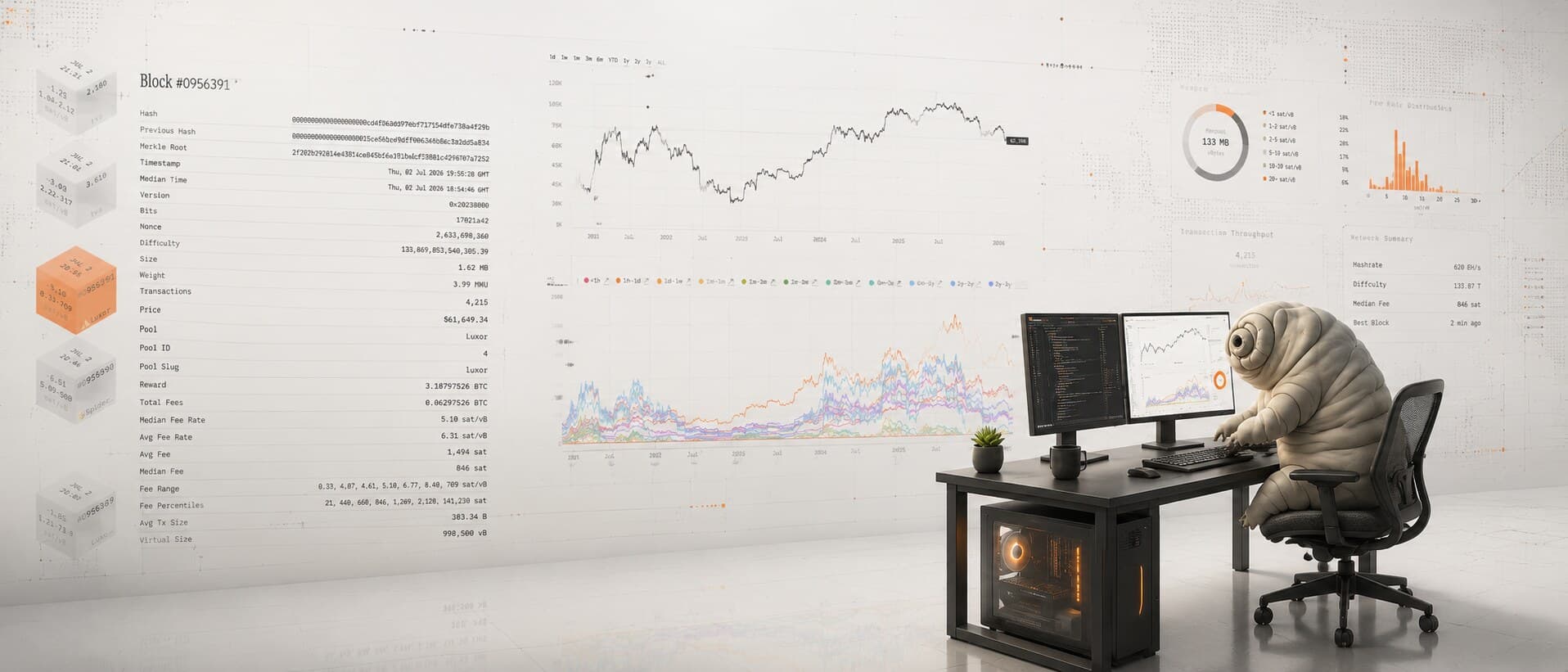
Partly out of spite, I made it my quest to offer as much on-chain data as I could to as many people as possible, for free, forever.
That is nym21, a pseudonymous developer and OpenSats grantee describing why the Bitcoin Research Kit (BRK) exists.
The spite was for companies like Glassnode, which charges from $99 a month to $11,200 a year for institutional-grade Bitcoin data, among other things. nym21 gives the same data away for free.
He self-hosts it from a base-model Mac mini he calls "the best bang for your buck server," with an external drive bolted on for storage. It's been answering requests, without a crash, for months. He runs it from his own desk rather than a data center on purpose: he wanted the same experience a self-hoster would have, the same rough edges, so the thing would actually be good to run at home.
For all the internet knows, nym21 is the tardigrade he uses for an avatar, a more apt self-portrait than he probably intended. (You'll see why; keep on reading.)
Before getting to how a cheap consumer box does the work of a data center, or why nobody else had bothered to do it for free, it helps to know what you're actually paying for when you buy on-chain data. In his words: just parsing and arithmetic.
Here's the joke at the center of the whole business: the data was never secret, because Bitcoin's ledger is public. Anyone can download the entire history of every transaction since the genesis block, and keep it on a laptop, the same copy everyone else has.
The crux is that a raw ledger doesn't answer questions. "Are long-term holders selling?" has a real answer sitting in that data, but getting it means parsing the whole chain and doing the arithmetic each time the next block is found.

Glassnode, which did as much as anyone to turn on-chain analysis into a paid product, built that machinery once, charged for the answers, and called it just good business. It's just the most visible of a crowded field, every one of them fencing the same public data behind a login, a subscription, or a house view on what's worth showing. None of it, nym21 bet, needed a data center. Only a spare computer.
There was one piece everyone assumed had to come from outside: the price. The chain knows when coins move, not what they're worth, so every analytics tool needs to pull its prices from an exchange. nym21 didn't want to depend on anyone.
He stumbled on a thing called Simple Steve's price oracle, the proof that Bitcoin's dollar price could be inferred from the chain itself, then spent two weeks hunting for a cleaner method.
He found one. The method itself is almost embarrassingly simple. People are forever sending round dollar amounts of bitcoin (fifty dollars' worth, a hundred), and every one of those payments is written into the public ledger. Gather enough of them and the day's price comes into view. It only works once a lot of people are transacting, so it starts in 2018, at block 525,000, and from there it sits within a few percent of the exchange price almost every day. Bitcoin's early years were too quiet to read this way, so those prices, back to 2009, he just filled in by hand.
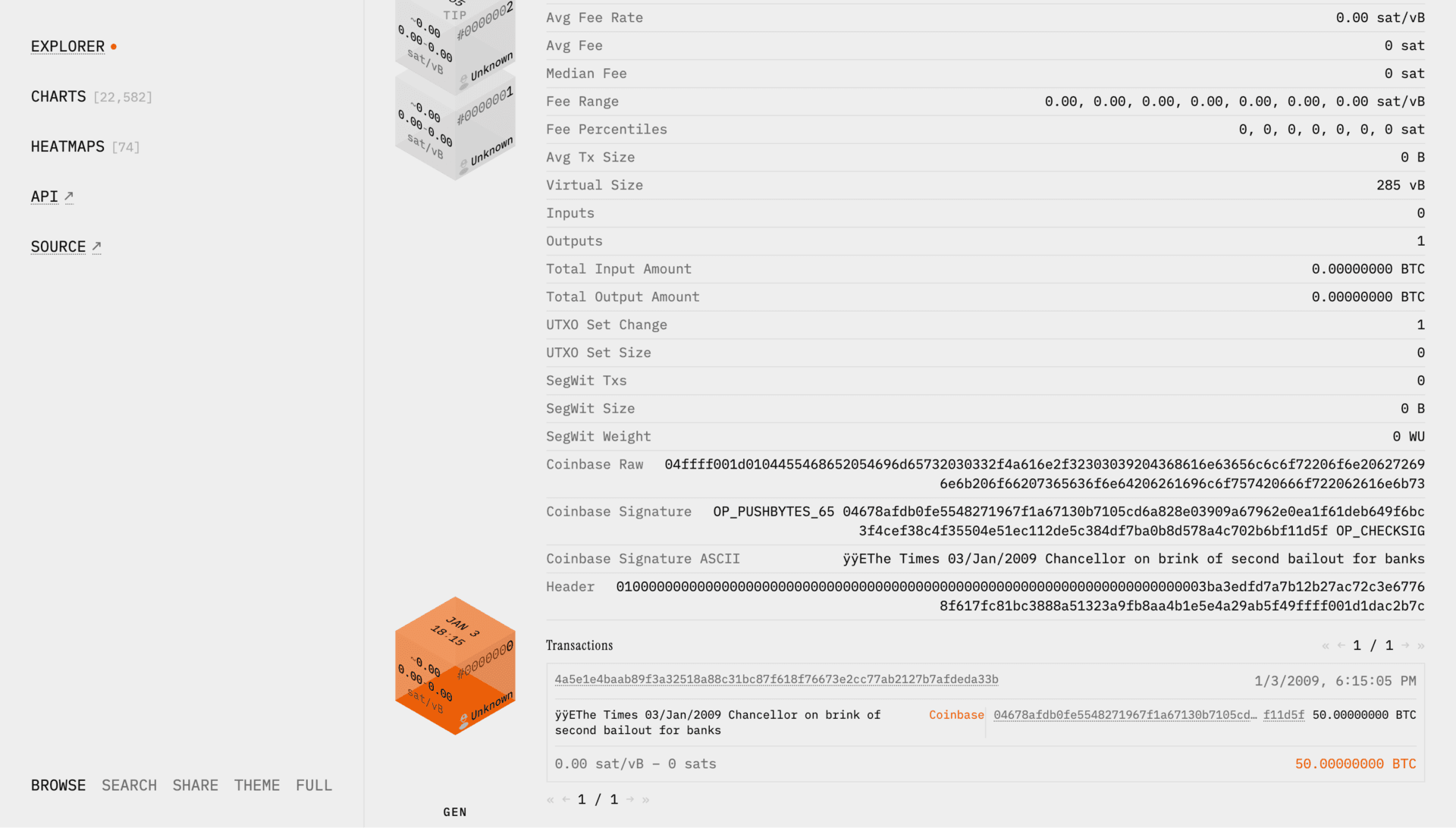
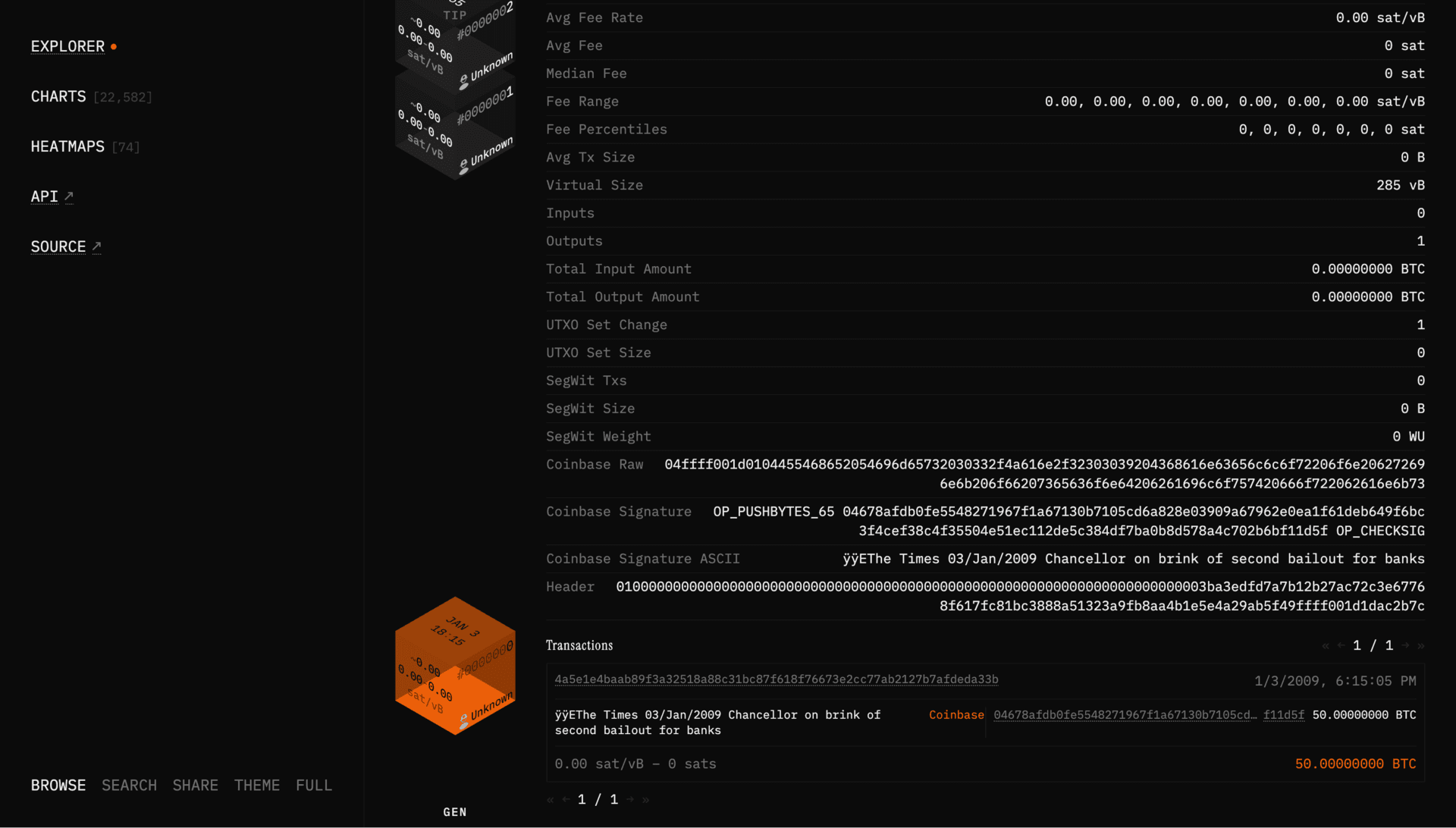
Because the chain is identical for everyone, anyone can verify these prices independently, and since the data lives on-chain, the only external input BRK still requires is the blocks themselves, which he notes can even be received via a Blockstream satellite.
It honestly felt like a discovery.
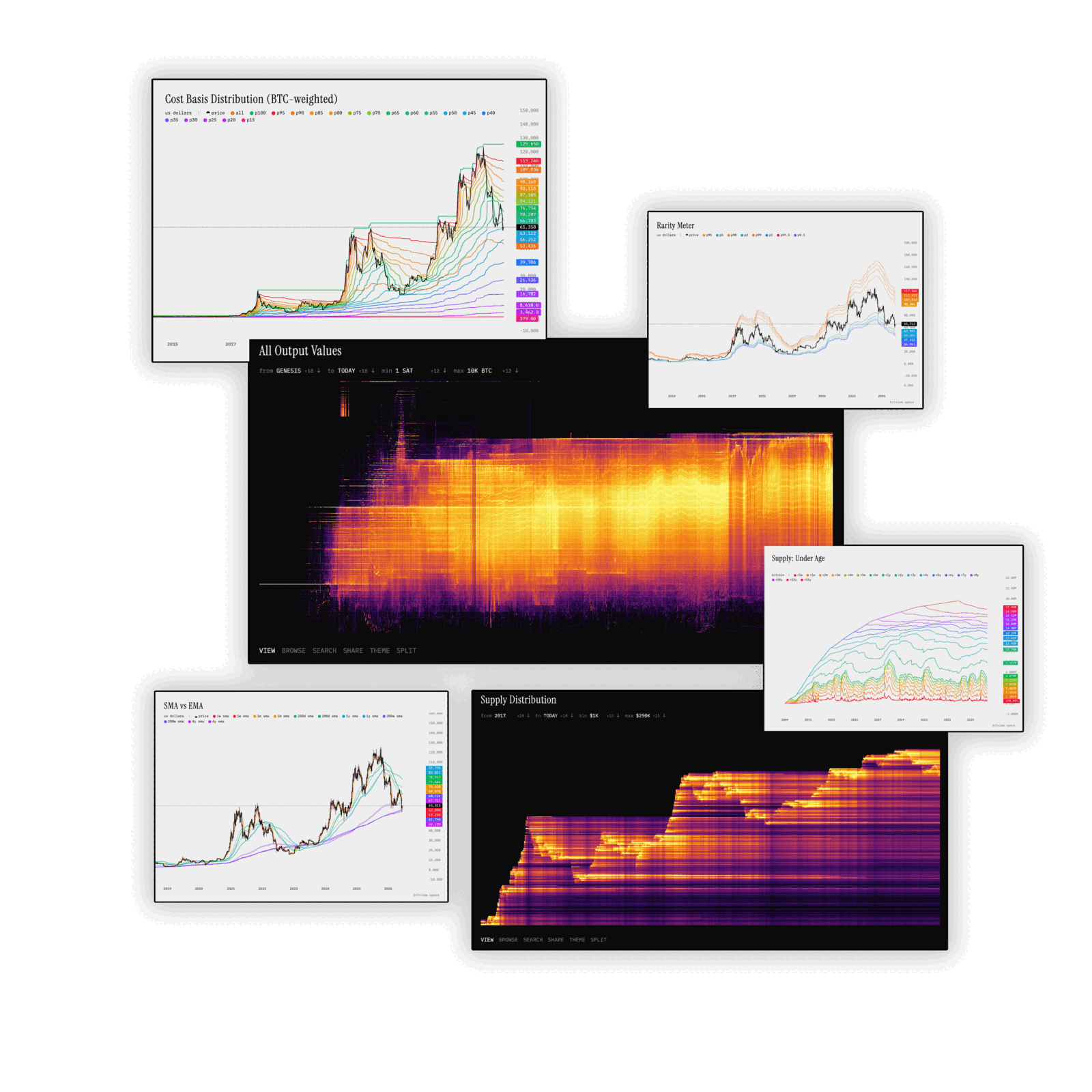
All that parsing and arithmetic produces something you can look at: thousands of charts, every one computed from the raw chain on that single Mac mini.
Long before Bitcoin, nym21 developed what he calls a disdain for Windows "and its enshittification," and switched to Linux for everything it stood for: freedom, privacy, the right to own the thing you run.
He went through Ubuntu, Debian, and Manjaro, the full distro-hopping tour before settling on Arch. He became a ricer, the r/unixporn word for someone who rebuilds the look and feel of his desktop from the config files up, swapping window managers, theming every bar and font and keybind, writing his own bash scripts to do it, and open-sourcing the lot. "Probably the most fun I've had programming to this day," he says.
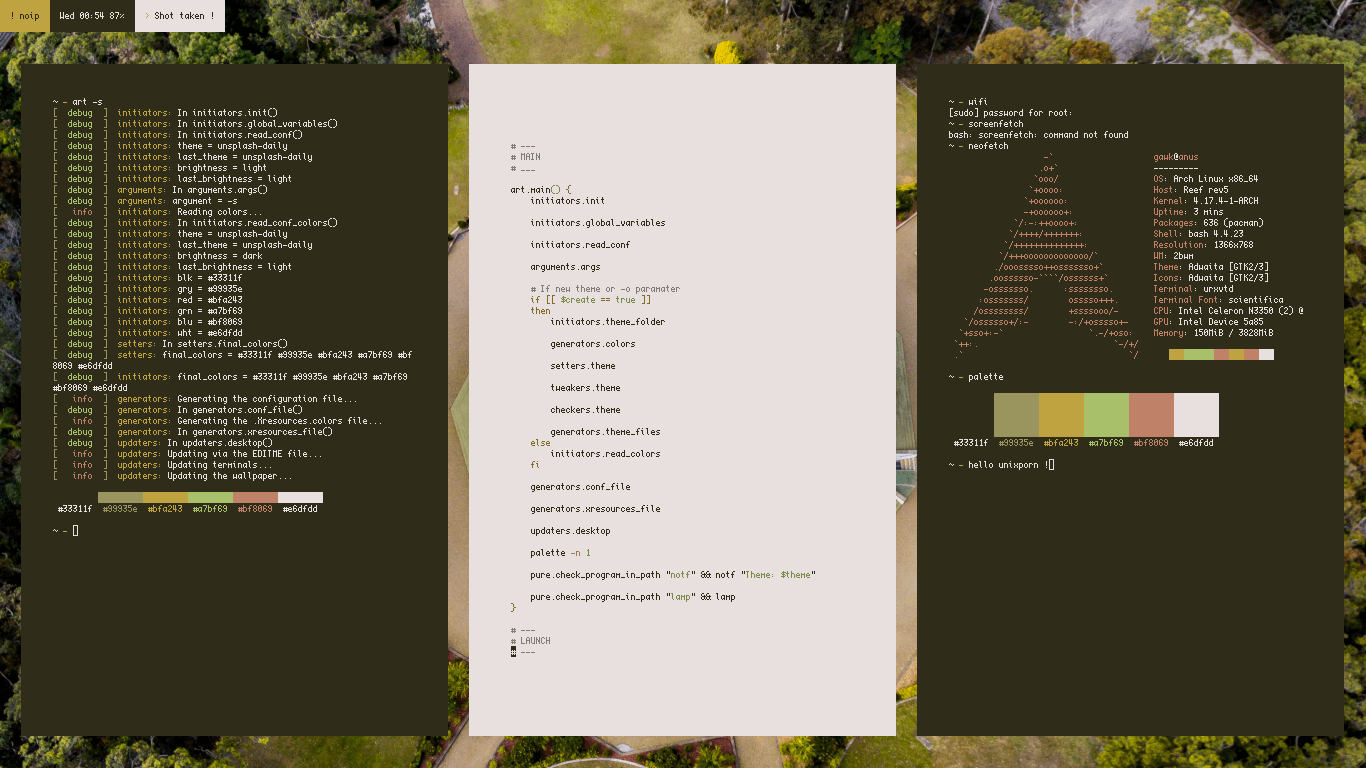
He moved to macOS eventually, after one too many updates broke something he needed, and says he missed nothing about Linux except exactly that. The fun. (He'd been through the same thing with mechanical keyboards, open-sourcing the designs and firmware: "great experience," he says, "absolutely terrible for your wallet.")
Bitcoin itself took a while to land. What finally did it was an analogy: he started thinking of it as "the Linux of money," and by his own cheerful admission has been "in the Bitcoin cult ever since."
He'd earned the conversion the hard way. He came to crypto in 2020, at the bottom of the Covid crash, decided Bitcoin was "grandpa coin" and too expensive, and put $100 into alternative coins like EOS and TRX because a subreddit told him to. (Classic.) It went so well that he got greedy, believed the $100k meme a little too hard, and ended up neck-deep in leveraged BTC and ETH futures that blew up in late 2021. The lesson arrived in the format every Bitcoiner eventually gets: stay humble, stack sats.
What he kept from all of it was a conviction that would harden into the project:
I've always believed that if something can be free, it should be. Just as using Bitcoin is a right and is free, access to its data should also be free, not gated behind entities that treat it as an advanced, proprietary service. In reality, it's just parsing and arithmetic.
It started, like most of his projects, with an itch. He was building himself a portfolio tracker and wanted to add investment strategies. That work pulled him down into on-chain indicators, a concept he first came across watching explainer videos on Glassnode, narrated, as it happened, by an analyst named James Check. (Remember him.)
The metrics were powerful, but the data behind them was the problem. The handful of free sources he tried, he says, came with at least one dealbreaker: "heavy rate limiting, sparse or irregular updates, very limited dataset, unreliable, unmaintained, etc." The few that actually worked cost a small fortune. An open-source alternative simply didn't exist.
He could've shrugged and paid up, like everyone else with a node and a begrudging nod. Instead the price gnawed at him:
I was left wondering why this was not already built, and how it could be so expensive. Ended up with the conclusion that the latter was mainly due to greed.
The first public version went out as satonomics, short for "satoshi economics." He renamed it kibō, Japanese for hope, which was the most hopeful thing about the project. He'd later swap it for the plainer Bitcoin Research Kit and wrote kibō off as "too generic."
Building a thing out of irritation and giving it away for free might be the most honest description of open-source work anyone has offered.
For a few years the project was just nym21, funding it himself, known to almost nobody. In 2024 he put up a Geyser crowdfunding page to buy the server that would run it. Then James Check found the page.
Yes, that James Check: the one whose Glassnode videos had taught nym21 the subject in the first place. Check didn't know him from anyone. "He somehow got aware of it," nym21 says, "and helped get it to the finish line."
By his own account, nym21 thanked Check on Nostr, and that thank-you turned into a running conversation. Over the next two years Check went from donor to self-hoster to running CheckOnChain, his own widely-read analytics service, entirely on BRK.
Before long it wasn't just Check. CryptoVizArt, an analyst at Glassnode itself, came to nym21 wanting a chart Glassnode didn't offer: every coin sorted by how long since it last moved, priced at the moment it did.
nym21 assumed it would be expensive to compute and store. It wasn't. "The computation was essentially free," he says, "and storing it, thanks to the age-band structure, was practically free too, under a gigabyte." Glassnode's own analyst had started reaching for the free tool when the paid one came up short.
The clearest proof that BRK had become infrastructure, though, was the day someone got caught using it.
In the spring of 2026, nym21 noticed that newhedge, a slick paid analytics platform, was publishing charts that looked an awful lot like his. He could be certain because of the price oracle: BRK computes prices in its own way, so a chart built on its data carries a fingerprint, and "it's not possible to have the same result" by accident. He said so in public, tagging the company.
newhedge's Alon Shvartsman replied within the half hour. "You're right, we should have credited BRK," he wrote. "We started using it recently and absolutely love it... happy to support/sponsor the project, let's talk!" nym21 was not entirely mollified.
already found 2 more charts from your latest update but I'll stop here it's 'bad' enough Very glad you love it and you can use it, it is MIT after all, just a shame you had to be caught red-handed to talk about it but sure let's talk
Then Shvartsman came clean on the scale of it: newhedge was using BRK as a source across "30–40 charts."
That's thirty to forty. Note that it's just one pseudonymous developer's free tool, quietly powering that many charts on a paid product, and the credit only arrived because the credit got demanded.
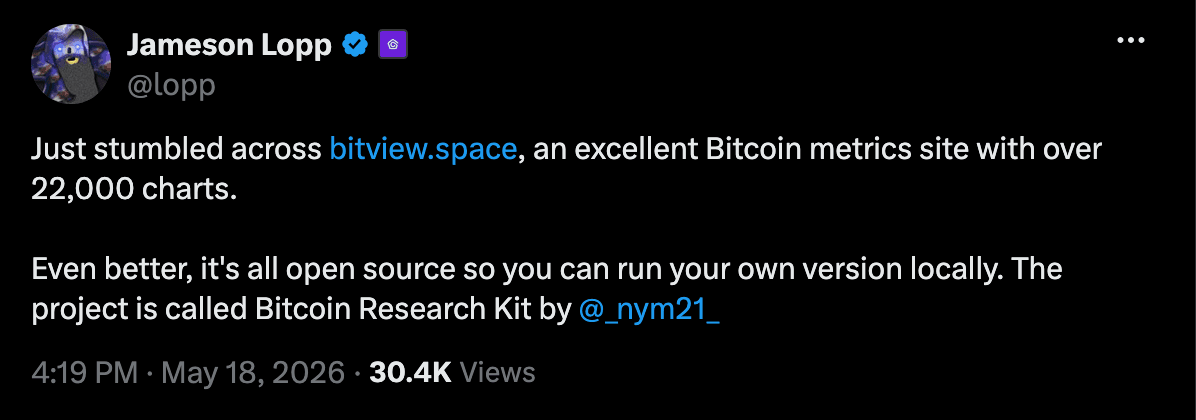
Weeks later, the recognition climbed past the on-chain crowd. Jameson Lopp, Casa co-founder and one of the most influential voices in Bitcoin, stumbled upon the project and told his followers:
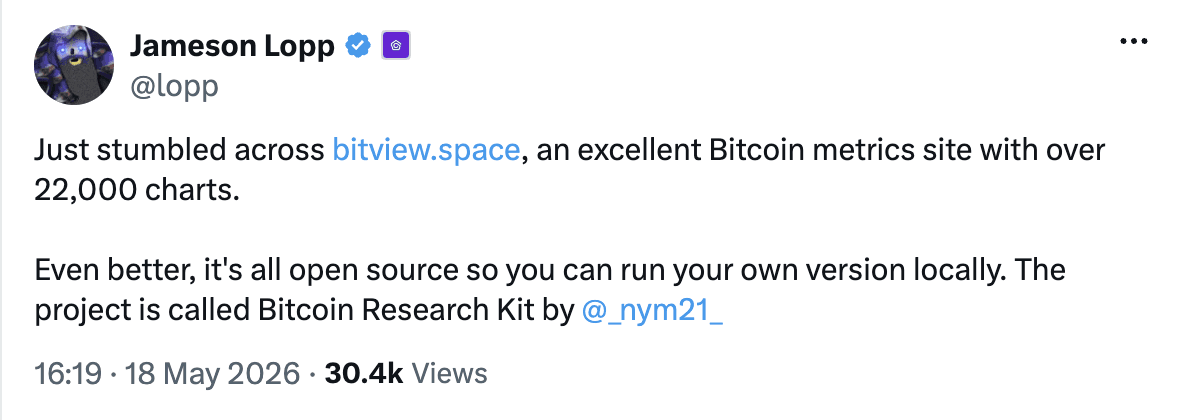
There's an irony humming under all of this. As the rest of Bitcoin came to depend on BRK, nym21 was spending most of his energy making sure BRK depended on nothing.
"Limiting the use of dependencies has been an on-going quest of mine," he says, and he means it almost literally. The hardest one to shake was the price itself: he'd been burned when Coingecko changed its terms under him, and again when exchanges rewrote their APIs. The oracle from earlier was the finish line of that fight: once price could be computed from the chain itself, he never had to ask an exchange for anything again.
The rest he removed the same way. He keeps the whole thing speaking plain HTTP, so it runs behind anything, on anyone's hardware, offline if it has to.
He prunes the Rust crates he leans on as aggressively as he can, wary of the supply-chain surprises that come from trusting too much code you didn't write, a bet that looks smarter every month another npm package turns out to be malware or AI slop.
He treats efficiency the same way. A full mempool.space instance, he found, can eat around 250% of the blockchain's own size. "I took it as a challenge," he says, and got BRK's equivalent down to roughly 45%.
The Mac mini isn't the destination, either. The point of getting it this lean is to run it on something anyone could leave going in a closet: a Start9, an Umbrel box. Asked when that support lands, he reaches for Christine Lagarde, the ECB president and no friend of Bitcoin: "It will come in due course."
The endpoint of all that removal is the part nym21 is most insistent about, and the part most people miss: you don't need him. The polished site most people land on, bitview.space, is just the default showcase. "BRK the project is the infrastructure," he says, "bitview is just a showcase." The whole thing is MIT-licensed and self-contained: two commands and a Bitcoin node, and you're running your own copy of the entire site, charts and all, answering to no one, not Glassnode, not even nym21.
The pattern goes beyond the code. The money that keeps him going now is OpenSats grants, not venture capital, which means nobody sits above the project deciding what it owes them. A price feed, a library, a platform, an employer, an investor: he's spent years removing dependencies one at a time.
What keeps him going, on the hard days, is mostly that the work matters: he calls it a privilege only a few people get, and motivating on its own. Underneath that is something he'll only half-own: "There is a sense of obligation towards users and OpenSats I suppose," he says, "and how I don't want to let either down." Of all the dependencies he's spent years pruning away, this is the one he never chose, and can't shake.
What comes after BRK is already drawn up, and has been for the better part of a decade. It's a game: online, competitive, something like a more hardcore Towerfall, running on a Bitcoin economy. He works on it a few days at a time, once or twice a year, on purpose, so it can't pull him off BRK.
Which brings us back to the tardigrade. nym21 built BRK the way that animal lives: on almost nothing, beholden to no one, and hard to kill. Cut its power, its internet, even its author, and a copy still boots back up on someone else's machine with two commands and a node.
So when he talks about stepping back, it isn't fatigue. It's a plan. What he wants instead is simple:
I sincerely hope that I'll be able to gradually find and move towards other sources of funding, donations and sponsorships, and eventually give back to OpenSats and free my 'seat' to another motivated developer with great ideas but no funding.
nym21 has been an OpenSats grantee since December 2024. The grant lets him work on the Bitcoin Research Kit full-time and keep it free to use, verify, and self-host. If you want to support nym21, tell someone the project exists. (Just remember to credit him for the work; looking at you newhedge!)
Our support for nym21's work was made possible thanks to your generous donations to The General Fund. For comments, corrections, or suggestions about our Spotlight series, please reach out to spotlight@opensats.org.